Apple iPhone 13 may have an optical in-display fingerprint sensor
January 1, 1970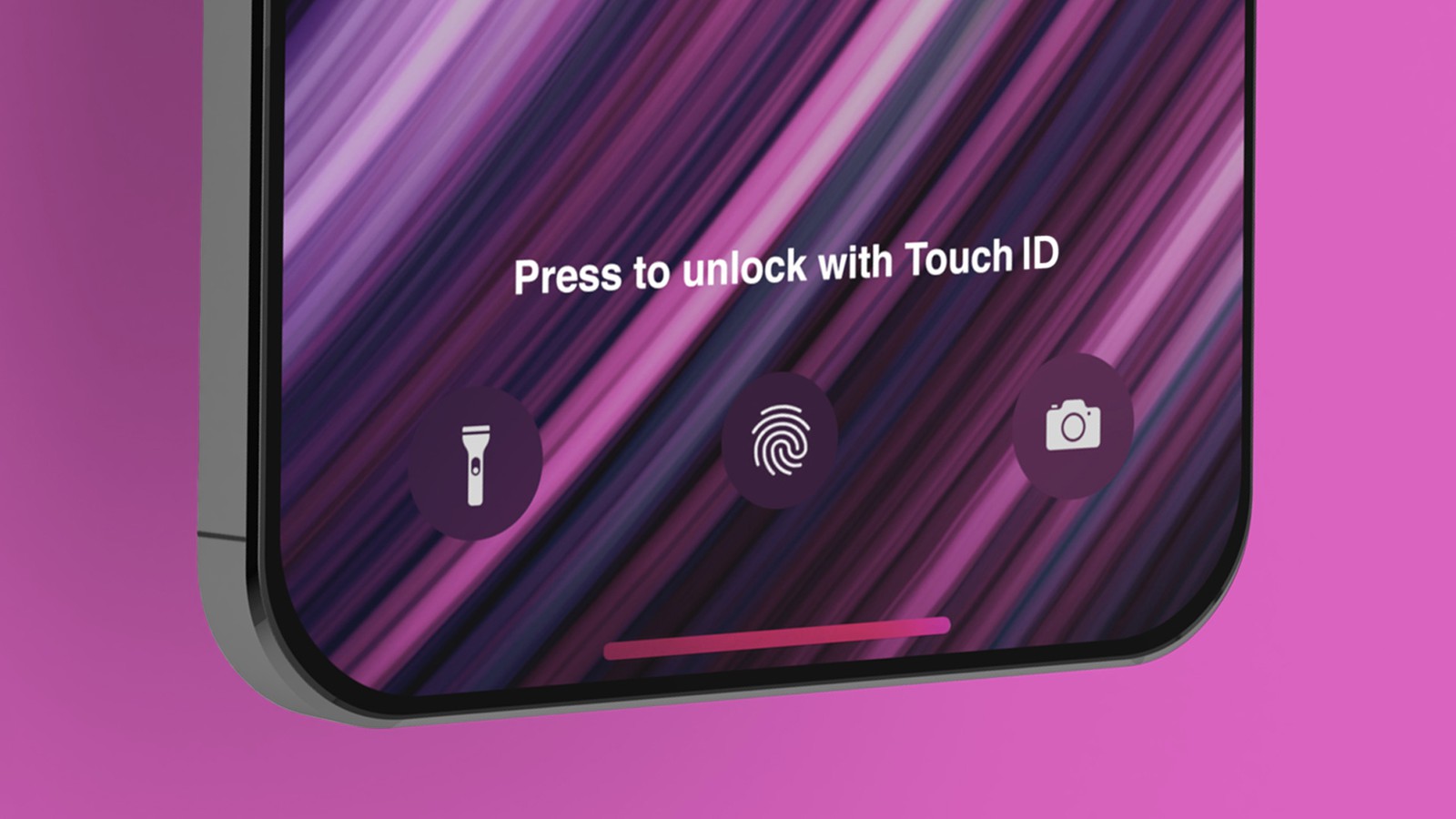
According to Joanna Stern of the Wall Street Journal, Apple is working on in-screen fingerprint technology for the iPhone 13, a feature that will be available alongside Face ID as a secondary biometric option. Stern shared the tidbit in an article on the Samsung Galaxy S21 features that could be included in the next generation iPhone.
We've heard a few more rumors about in-display Touch ID functionality from trusted sources such as Apple analyst Ming-Chi Kuo and Mark Gurman of Bloomberg, both of whom have stated that this is a feature Apple is considering adding to new iPhones. The additional "Touch ID" option will be useful in situations where Face ID is not optimal, for example, when wearing a face mask.
Stern said she heard a former employee say the company is working with optical sensors to read in-screen fingerprints, which “may be more reliable” than an ultrasonic solution.
The optical fingerprint sensors in the display work using light, and in Android phones using this technology, the screen is illuminated with a fingerprint icon where you have to place your finger to provide light, and the camera creates an image of your finger. Optical sensors are easy to trick because they use a 2D image.
Ultrasonic fingerprint sensors are a new technology that uses small sound waves to create a 3D fingerprint map. It is a safer solution that is not easy to cheat, and works best when your fingers are wet. However, ultrasonic fingerprint recognition technology is much more expensive.
The Touch ID home buttons that Apple have used on the iPhone, iPad, and Mac are capacitive. Capacitive sensors use a series of tiny capacitors to create a fingerprint data card that is difficult to trick as it does not use a direct fingerprint image.
It's worth noting that there are optical-capacitive hybrid sensors, so if Apple opts for an optical solution, the Touch ID functionality won't necessarily be as insecure as some optical sensors used by Android manufacturers. In fact, it is very unlikely that Apple would use a standard optical sensor, but an opto-capacitive hybrid would combine the advantages of fast scanning of an optical sensor with the safety of a capacitive sensor, and this system would not be easy to fool.
Stern says that whatever decision Apple chooses to make, her source said, must meet the security standards of its current Touch ID Home button, so functionality will not be downgraded.
While Stern's source says Apple is working on optical technology, Apple analyst Ming-Chi Kuo believes Apple is going to use ultrasonic technology. He said GIS will provide Apple with "large area ultrasonic sensing" technology, and Qualcomm will provide an ultrasound module and lamination. However, Apple has also patented an "acoustic" Touch ID feature that will work on the display.
Regardless of the implementation, the return of "Touch ID" to "iPhone" will be welcomed as it will provide more authentication options for unlocking the "iPhone" in various situations, as well as an additional layer of security. So far, we have no confirmed rumors that this technology will definitely appear in the next generation iPhones, and it is unclear if all 2021 iPhones will use this technology, especially if a more expensive ultrasonic solution is used.